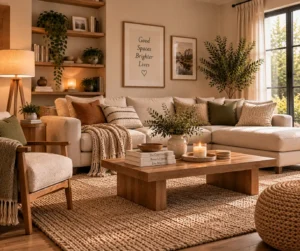
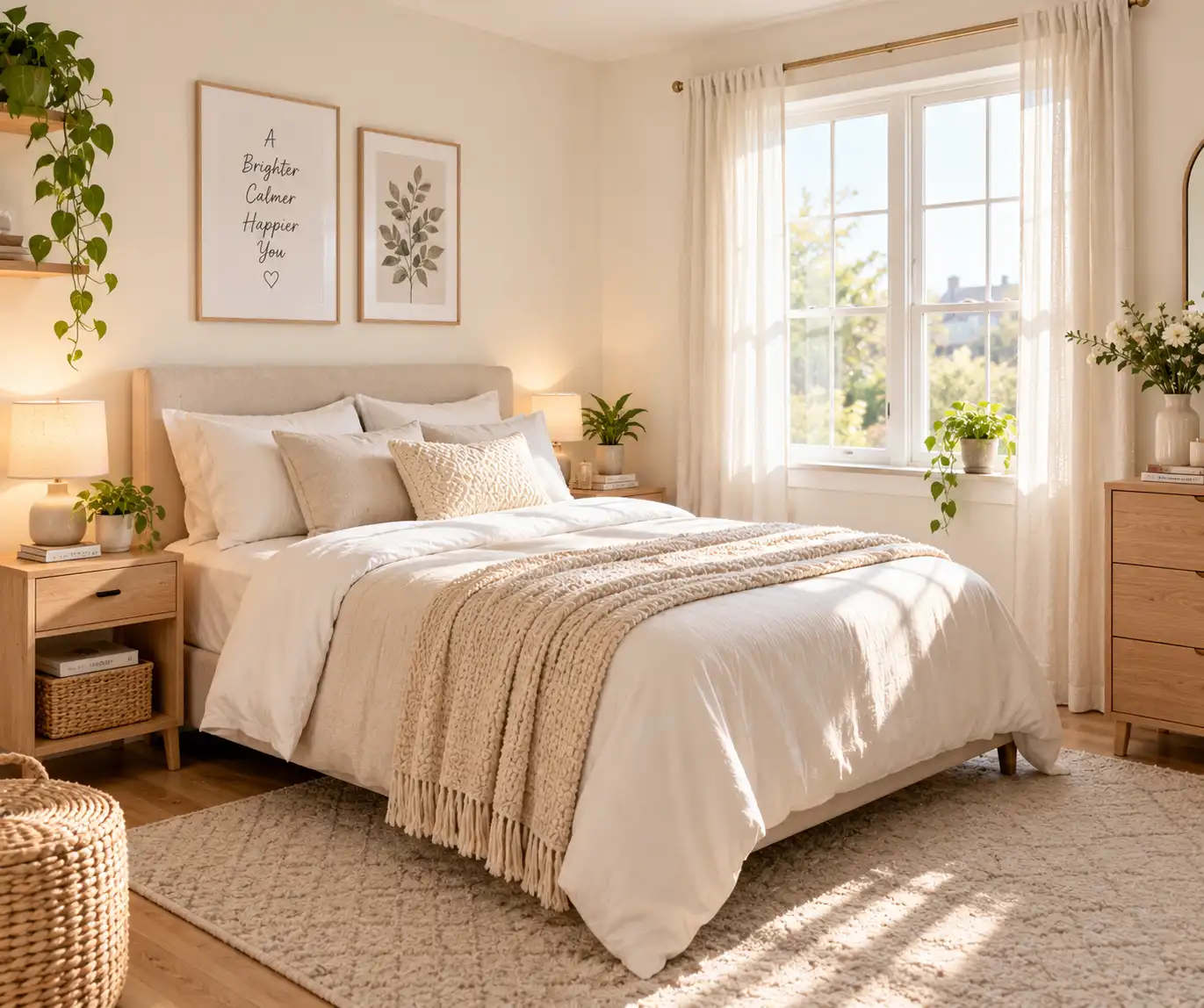
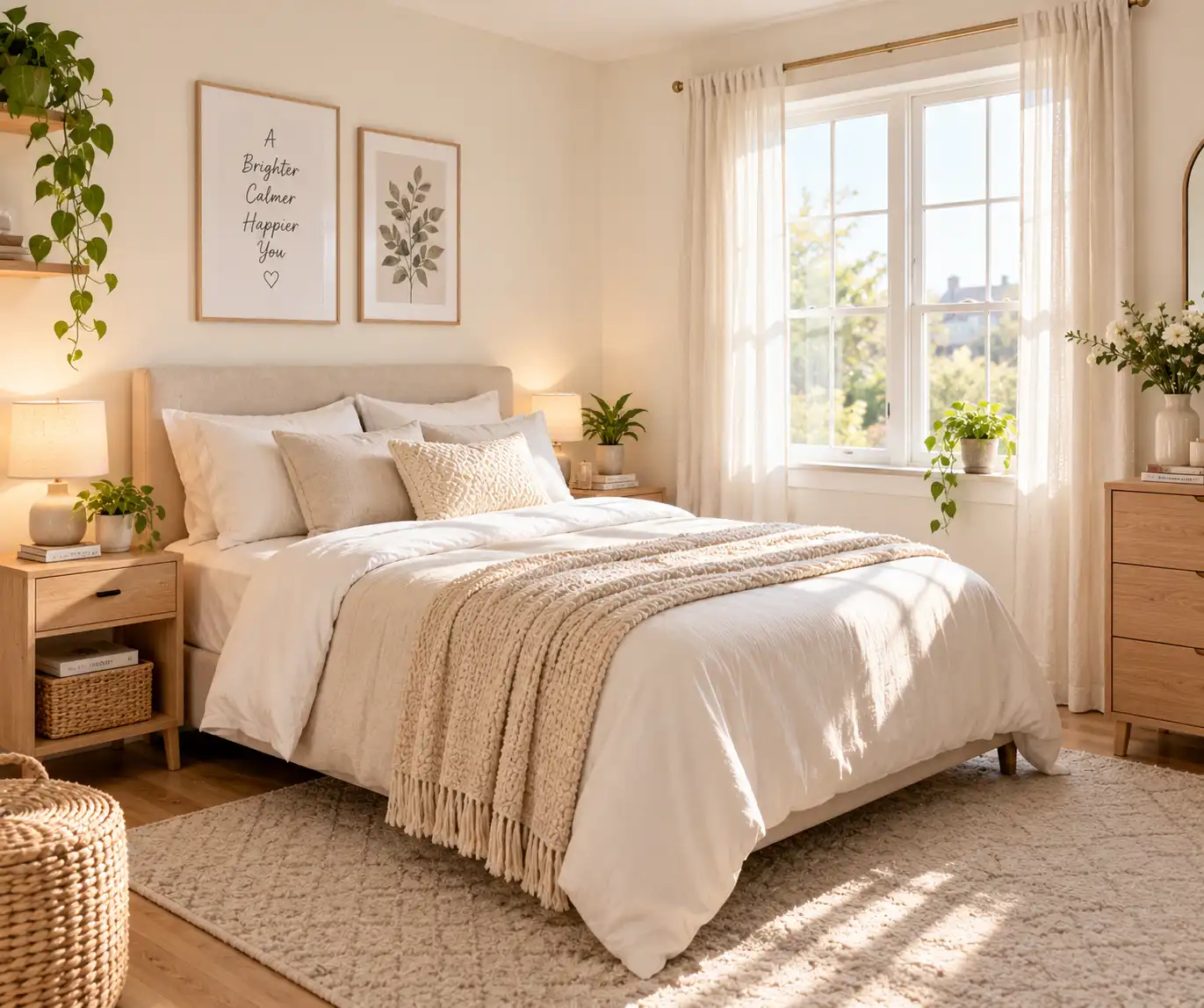
A small bedroom can still feel comfortable, stylish, and inviting. The key is choosing furniture, colors, and storage solutions that make good use of the space you already have.
You do not need to knock down walls or completely redesign the room. A few smart changes can make a noticeable difference in how open and comfortable your bedroom feels.
These small bedroom ideas will help you create a room that feels brighter, less crowded, and easier to enjoy every day.
Explore more Home & Decor inspiration on TrendMuse for simple and stylish room ideas.
1. Use Light Colors on the Walls
Light colors can make a small bedroom feel more open and airy. Soft white, warm beige, pale gray, and light cream are easy choices for creating a brighter backdrop.
You do not have to make everything pure white. A warm neutral shade can add personality while still keeping the room visually light.
If you already have darker walls, you can introduce lighter bedding, curtains, and accessories to create a similar effect.
2. Choose a Bed With Built-In Storage
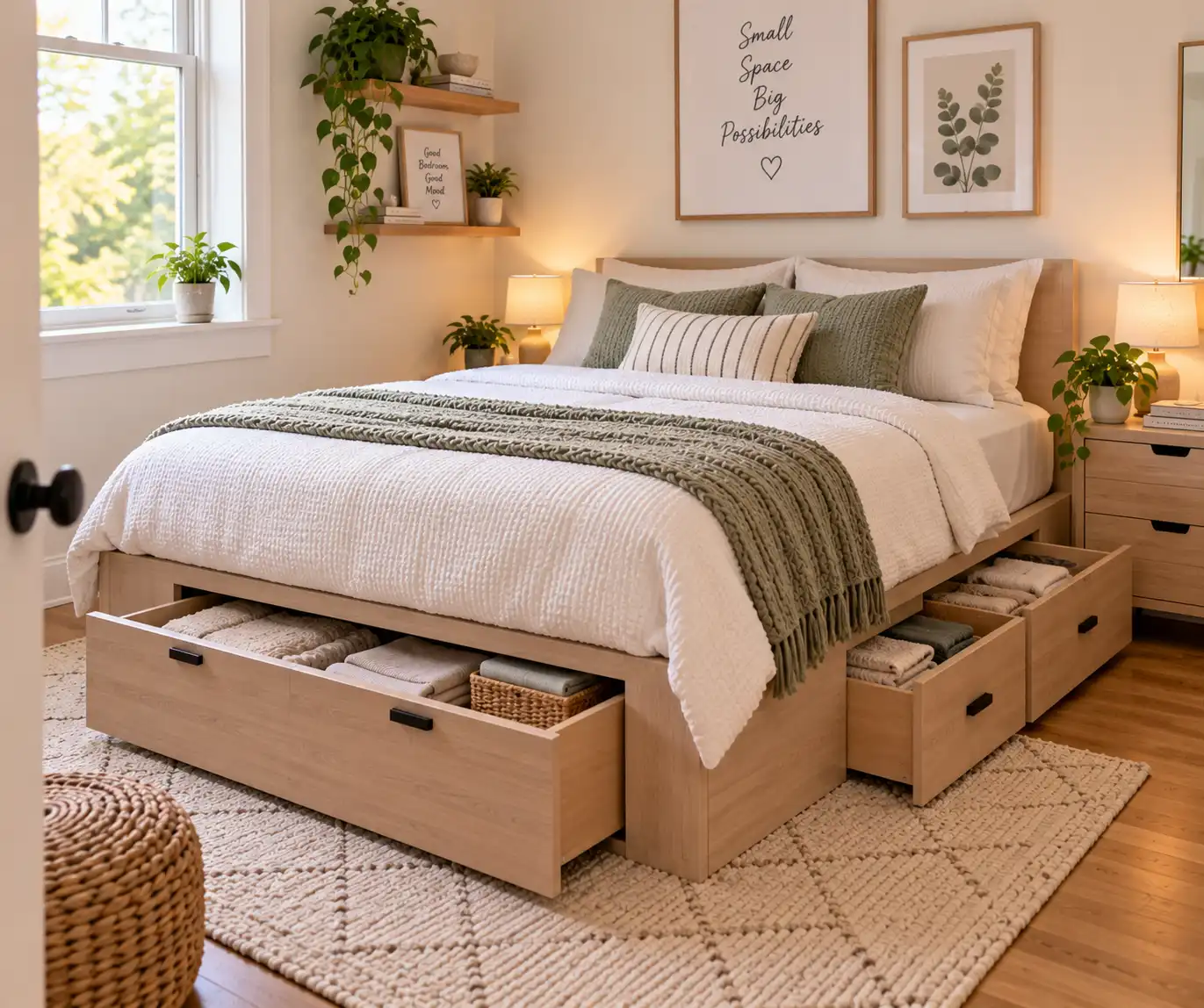
In a small bedroom, the area underneath the bed can become valuable storage space.
A storage bed with drawers or lift-up compartments gives you somewhere to keep extra bedding, seasonal clothing, shoes, or other items without taking up additional floor space.
If you already have a regular bed, simple storage boxes that slide underneath can provide a similar solution.
Keep the storage organized so it does not become another place for clutter to collect.
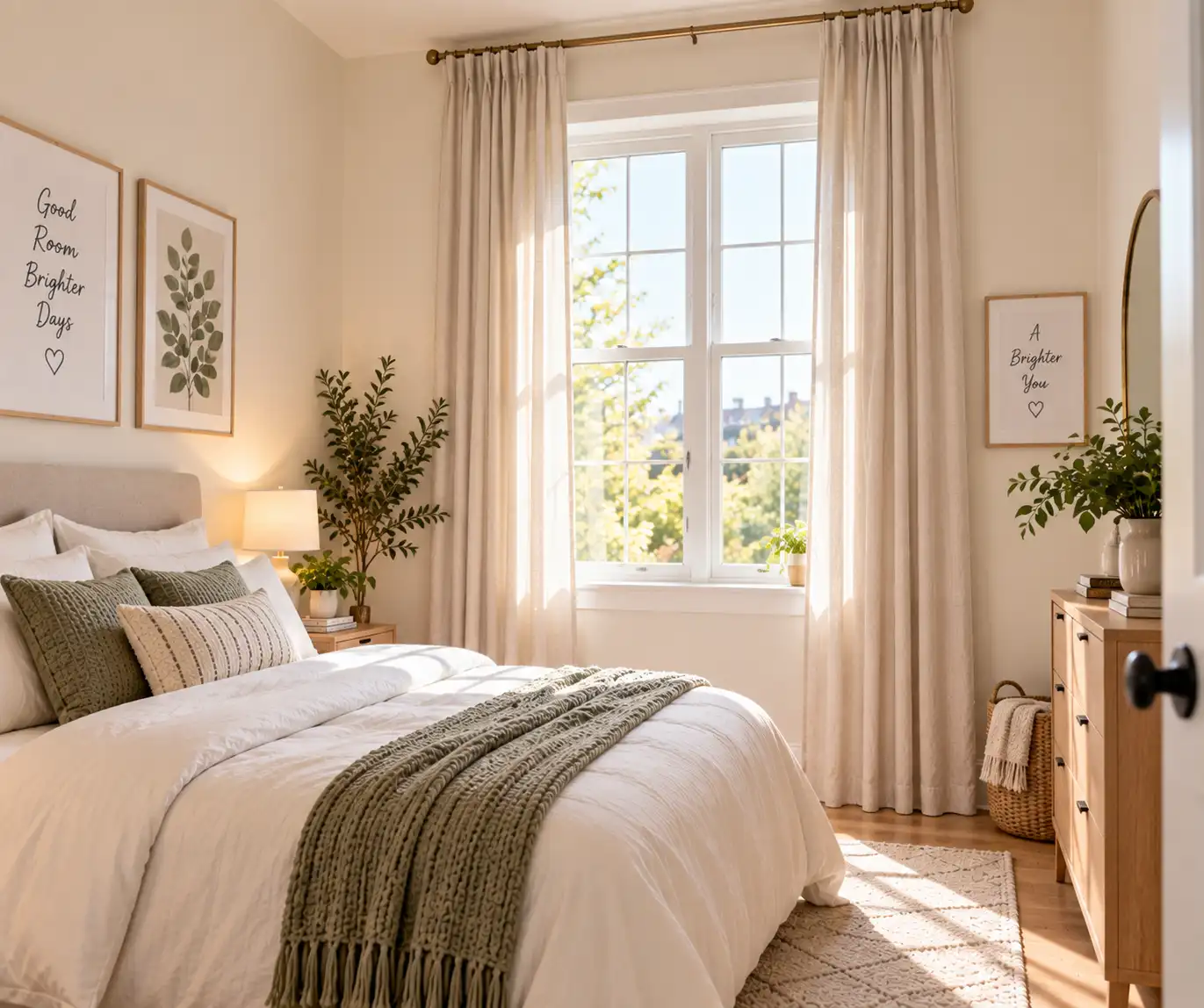
3. Hang Curtains Higher
The position of your curtain rod can change how tall the bedroom feels.
Try mounting the rod slightly above the window frame and allowing the curtains to fall close to the floor. This draws the eye upward and can give the room a taller appearance.
Choose simple curtains in a light or neutral shade if you want to keep the look airy.
Avoid overly heavy fabrics if your room already feels dark or cramped.
4. Add a Large Mirror
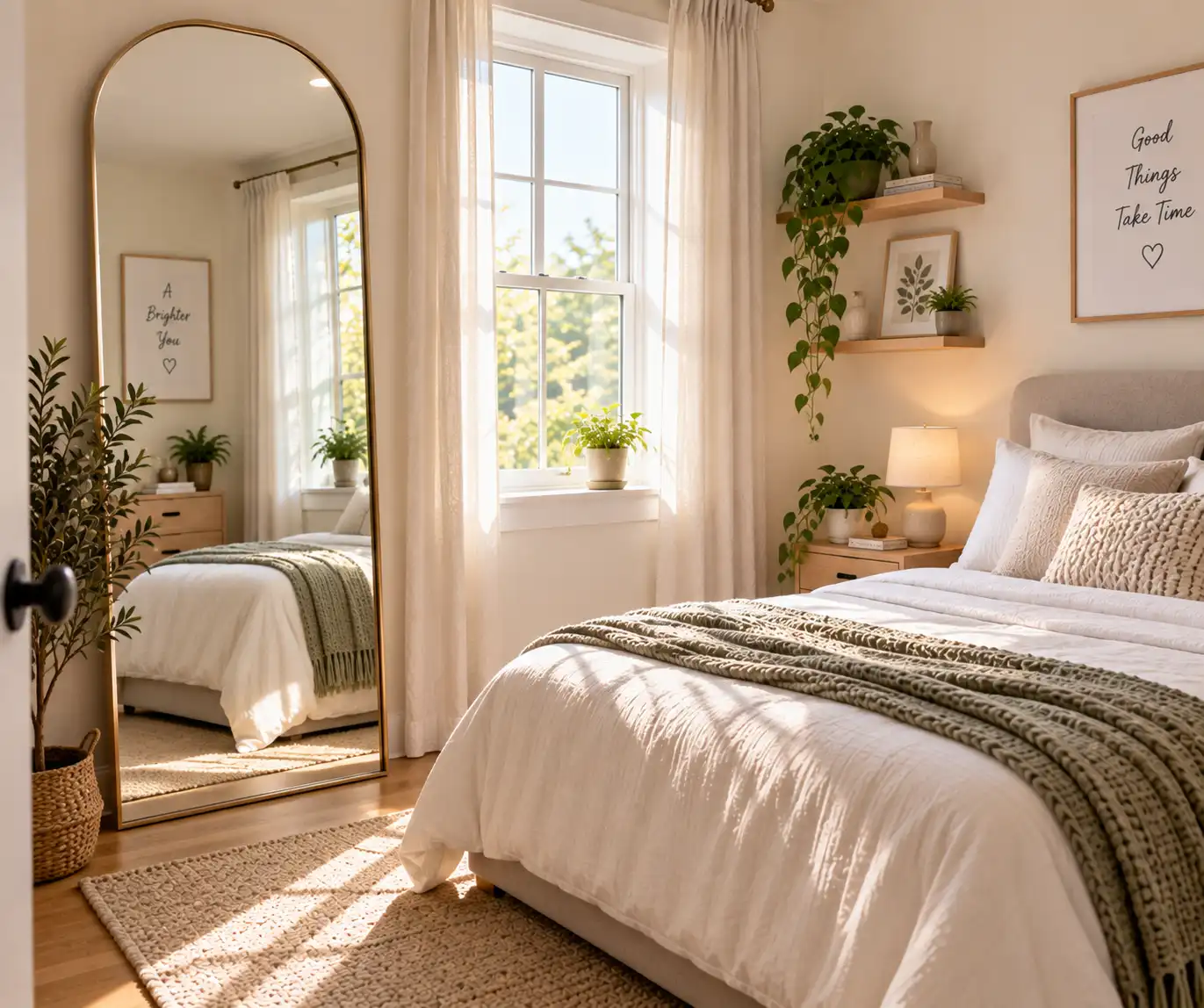
A mirror can be one of the easiest ways to make a small bedroom feel more open.
Place a large mirror where it can reflect natural light or another bright part of the room. A full-length mirror can also be useful while taking up very little floor space when leaned against a wall or mounted securely.
For a softer look, choose a simple frame that works with the rest of your bedroom decor.
5. Keep the Floor Clear
An open floor can make a surprisingly big difference in a small bedroom.
Try to avoid filling every corner with furniture. If something does not have a clear purpose, consider removing it or finding another place for it.
Wall-mounted shelves, floating nightstands, and hooks can help keep everyday items off the floor.
The more visible floor you have, the less crowded the room is likely to feel.
6. Choose Furniture That Fits the Room
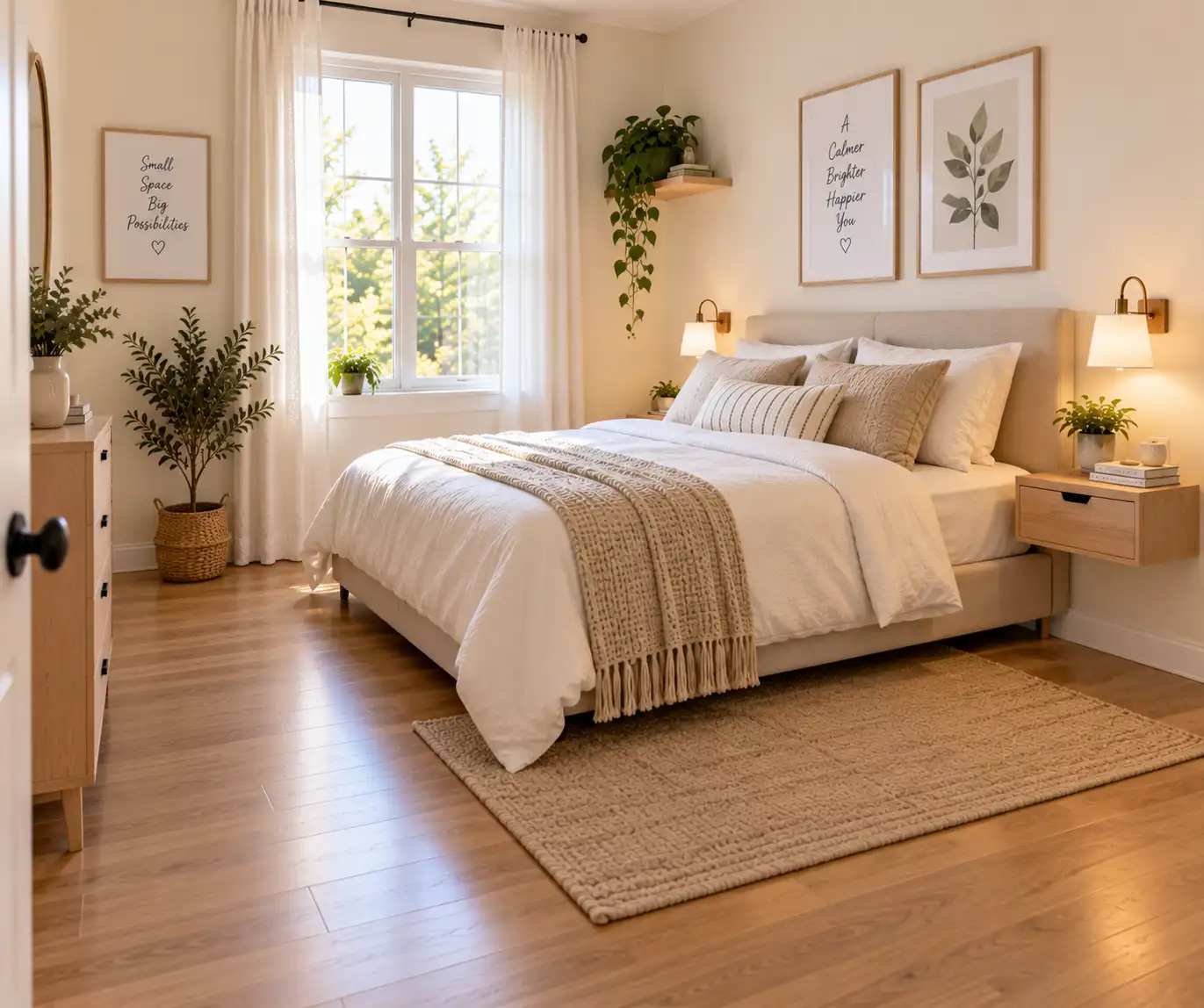
Large furniture can quickly overwhelm a small bedroom.
Instead of choosing the biggest bed, dresser, or nightstand that fits, look for pieces that leave enough room to move comfortably around the bedroom.
A slim nightstand can work just as well as a bulky one. A narrow dresser may provide enough storage without taking over an entire wall.
Measure the room before buying anything new. A few extra inches of walking space can make the room feel much more comfortable.
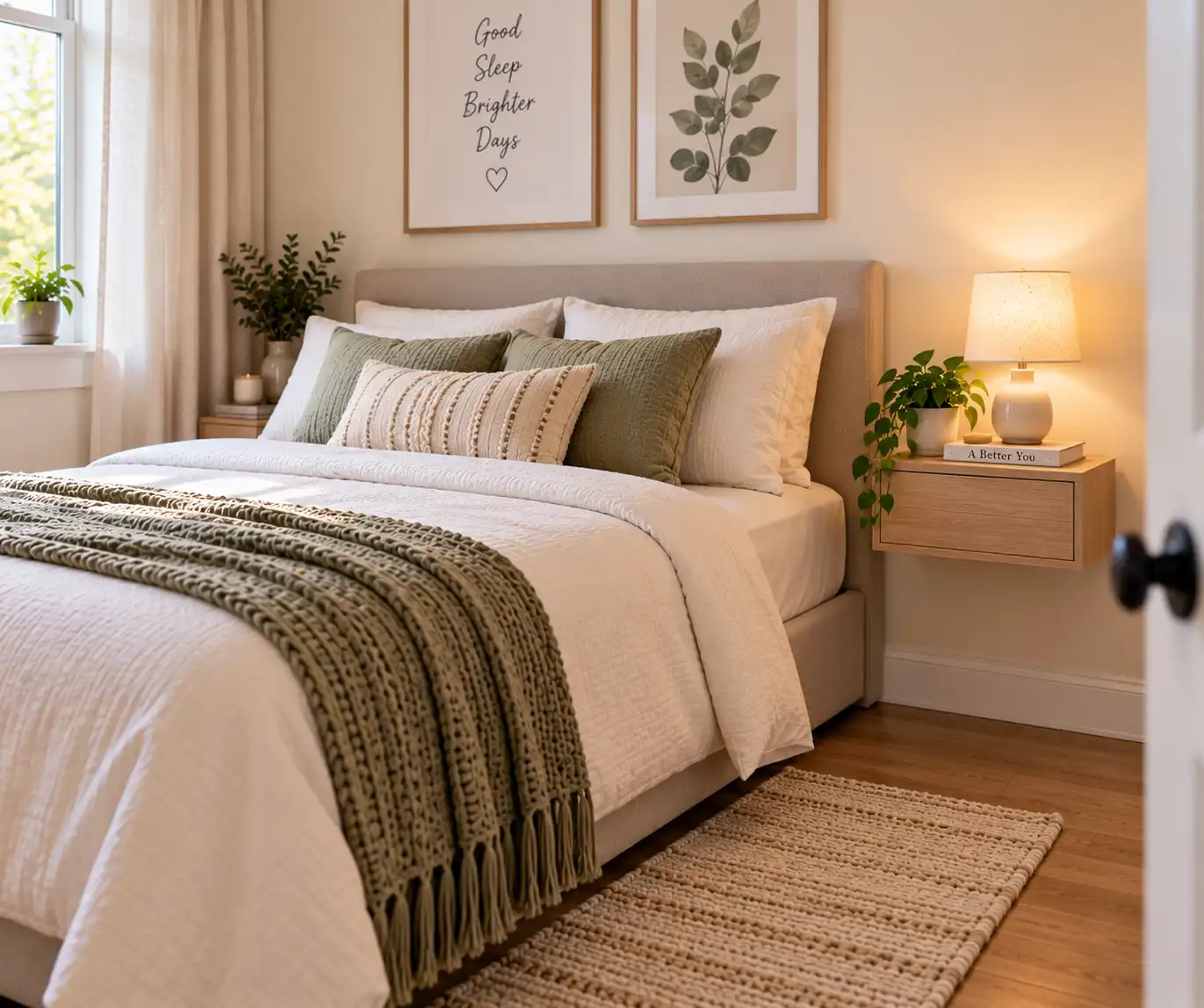
7. Try a Floating Nightstand
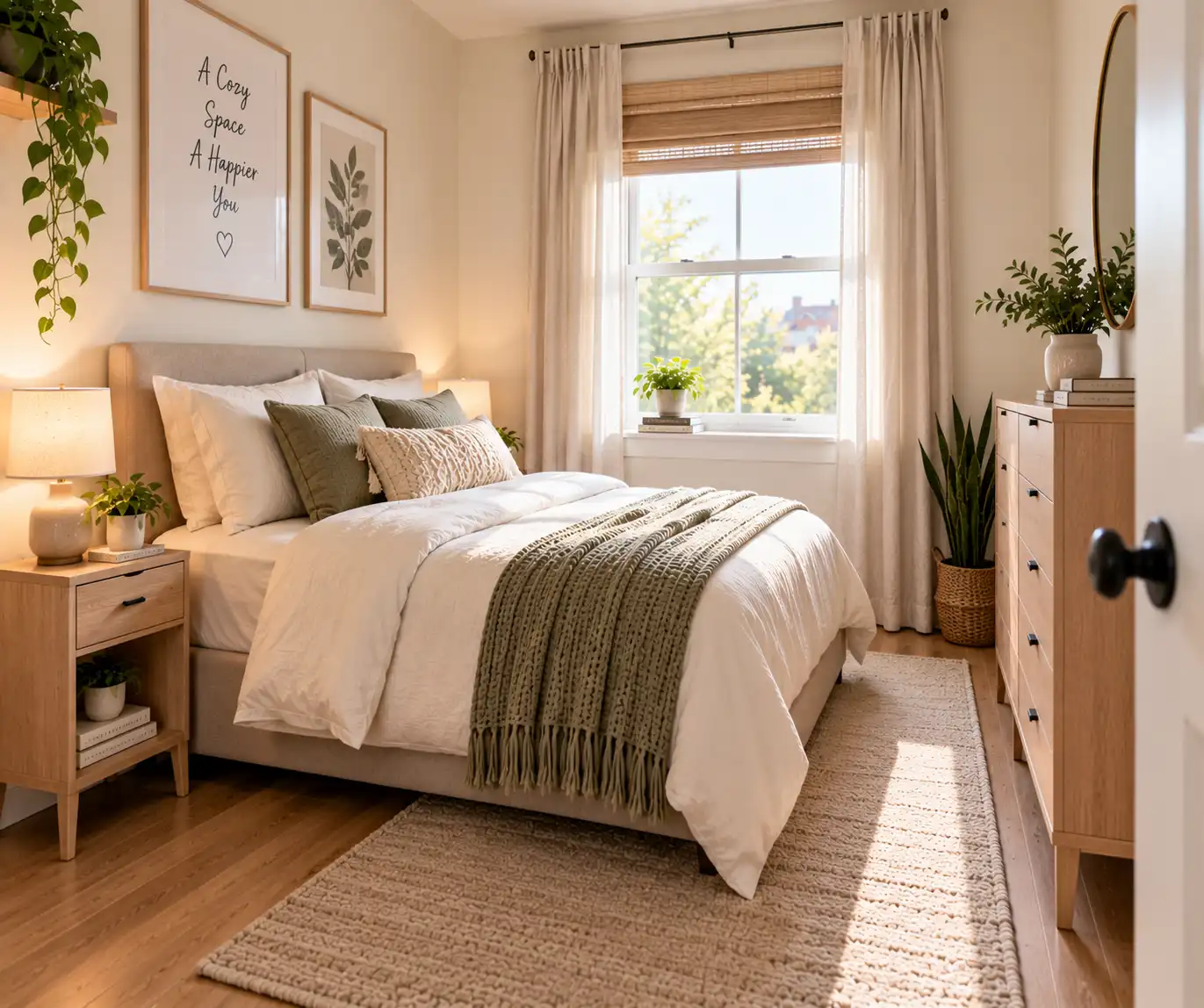
Traditional nightstands can take up more floor space than you realize.
A floating nightstand attaches directly to the wall and leaves the floor underneath open. This can make the room feel lighter while still giving you a convenient spot for a lamp, phone, or book.
A small wall-mounted shelf can work too if you prefer a more minimal look.
This is especially useful in bedrooms where there is very little space beside the bed.
8. Use Vertical Storage
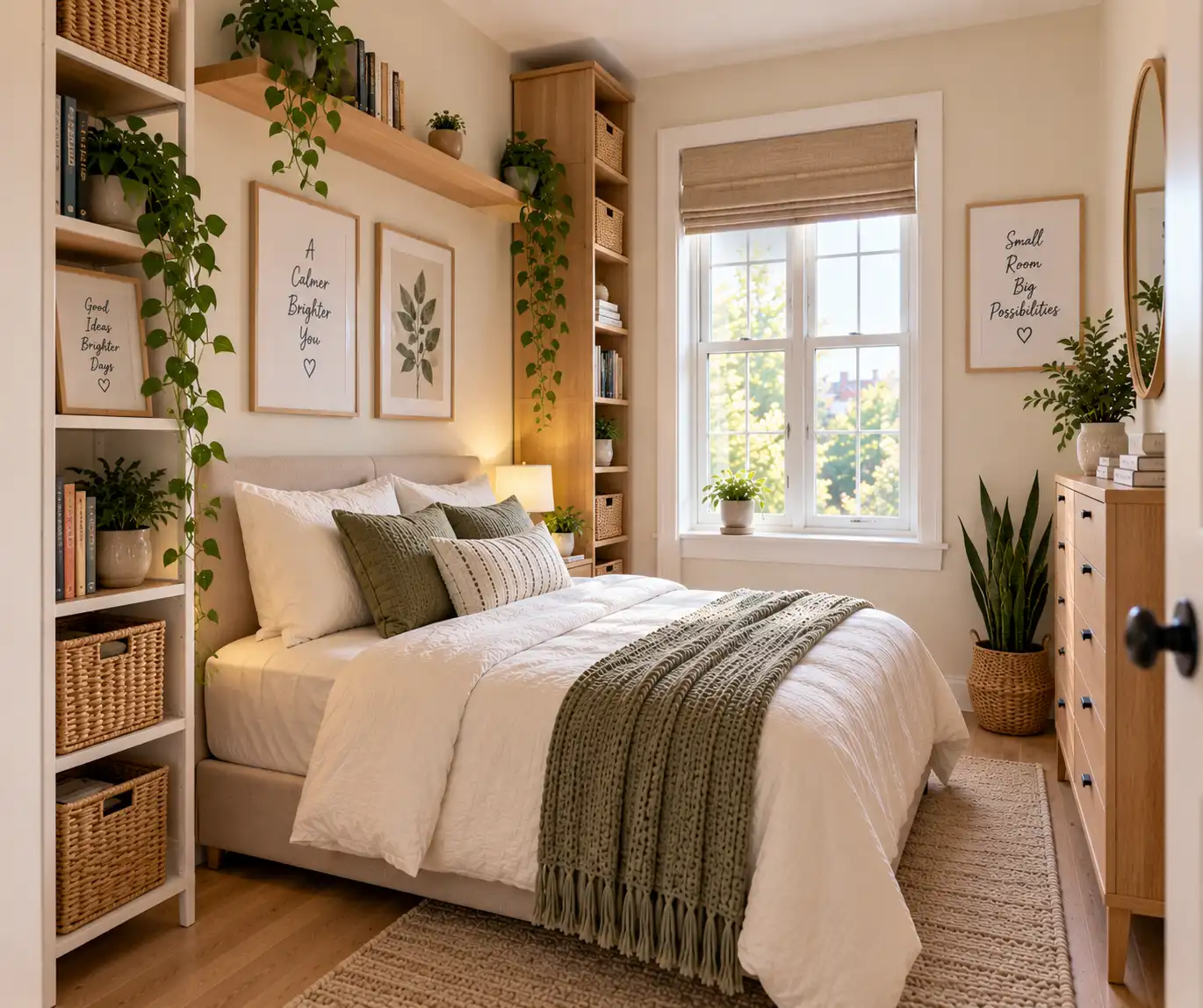
When floor space is limited, look upward.
Tall bookcases, narrow wardrobes, wall shelves, and vertical organizers can provide useful storage without spreading furniture across the room.
Keep frequently used items within easy reach and place less-used belongings higher up.
Using the walls effectively can help you store more while keeping the main floor area open.
9. Choose Bedding With Simple Patterns
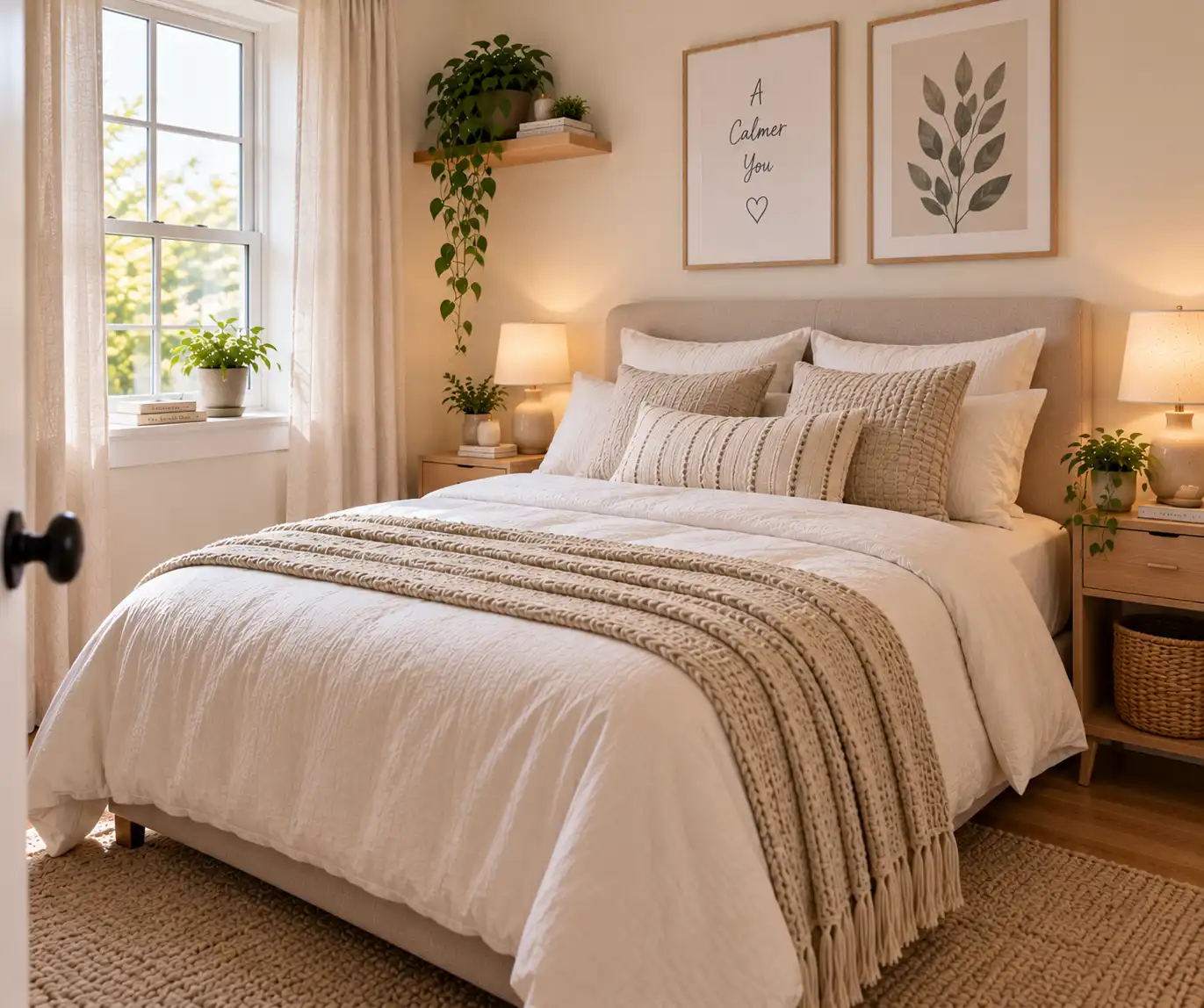
Bedding covers a large part of the bedroom, so its design can strongly affect how spacious the room feels.
Simple patterns, solid colors, and subtle textures usually create a calmer appearance than very busy prints.
Soft neutrals can make the bed blend naturally with the room, while a few textured pillows or a throw can add interest.
You can still use color. Just try to keep the overall bedding palette coordinated rather than crowded.
10. Let in More Natural Light
Natural light can make almost any small room feel more welcoming.
Keep windows as clear as possible and avoid placing tall furniture directly in front of them. Lightweight curtains can provide privacy without blocking too much daylight.
If your bedroom receives limited sunlight, use mirrors and light-colored surfaces to help reflect the available light around the room.
A bright room generally feels more open than a dark, heavily layered one.
11. Use One Larger Rug Instead of Several Small Ones
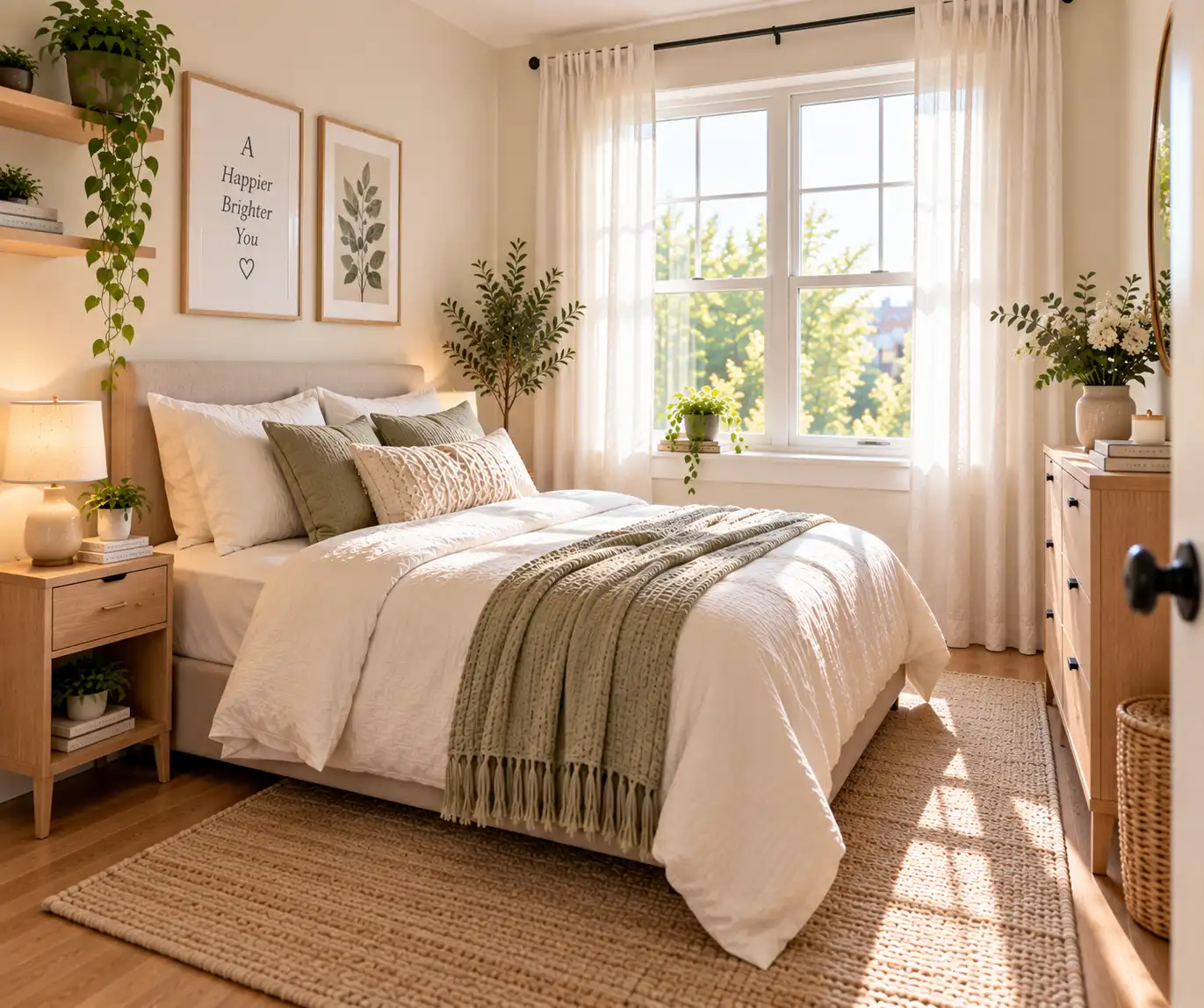
A rug can make a bedroom feel warm and finished, but too many small rugs can visually break up the floor.
One appropriately sized rug can create a more connected look and make the room feel less cluttered.
Place it so that it works naturally with the bed and surrounding furniture. A simple design in a soft neutral shade can keep the floor visually calm.
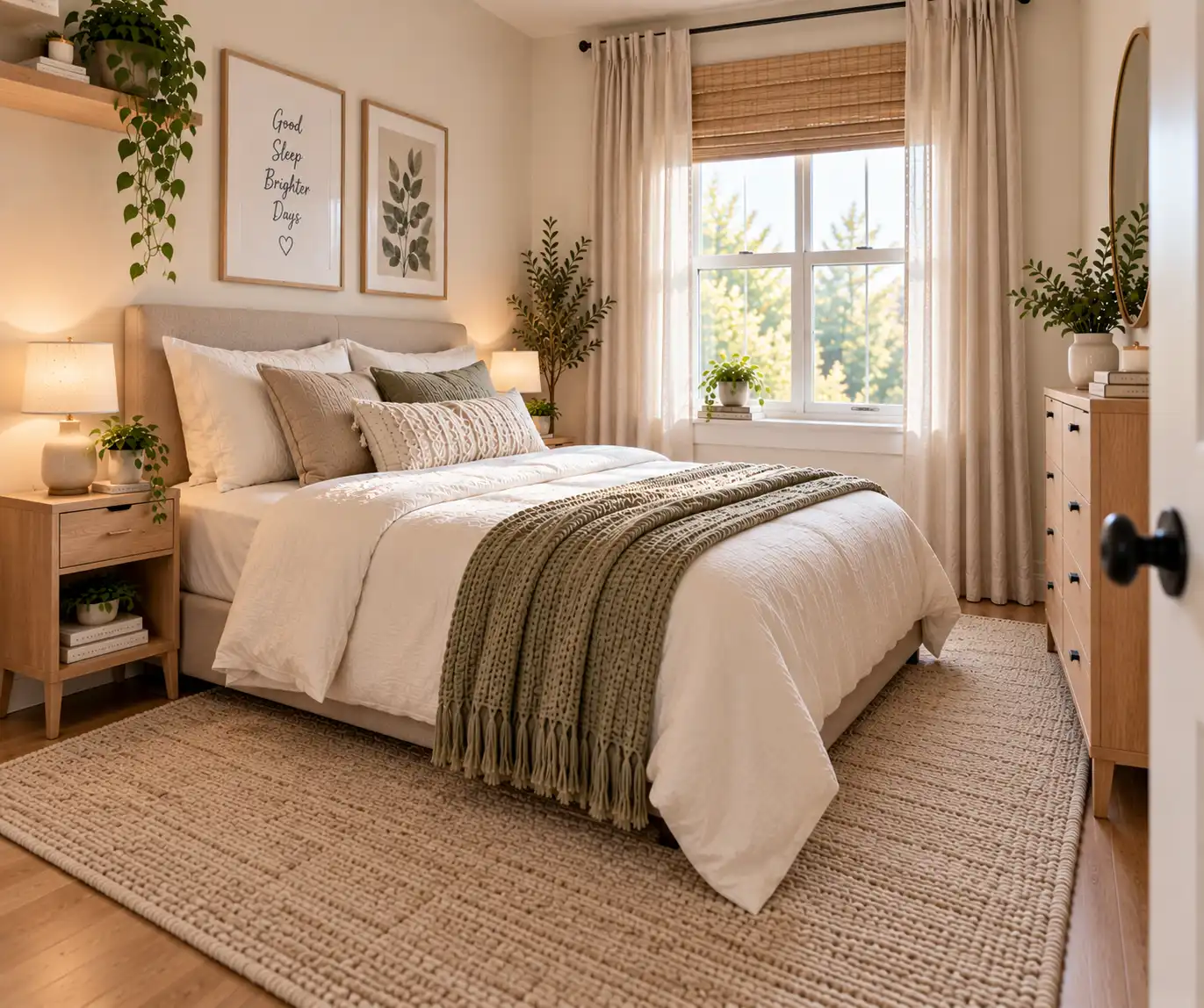
12. Keep Decor Simple
Decorating a small bedroom does not mean every surface needs something on it.
Choose a few pieces that you genuinely like instead of filling shelves, nightstands, and walls with small accessories.
One large piece of artwork can sometimes make more impact than several tiny frames. A plant, lamp, or decorative object can add warmth without creating visual clutter.
Leave some empty space around your favorite pieces. It helps them stand out.
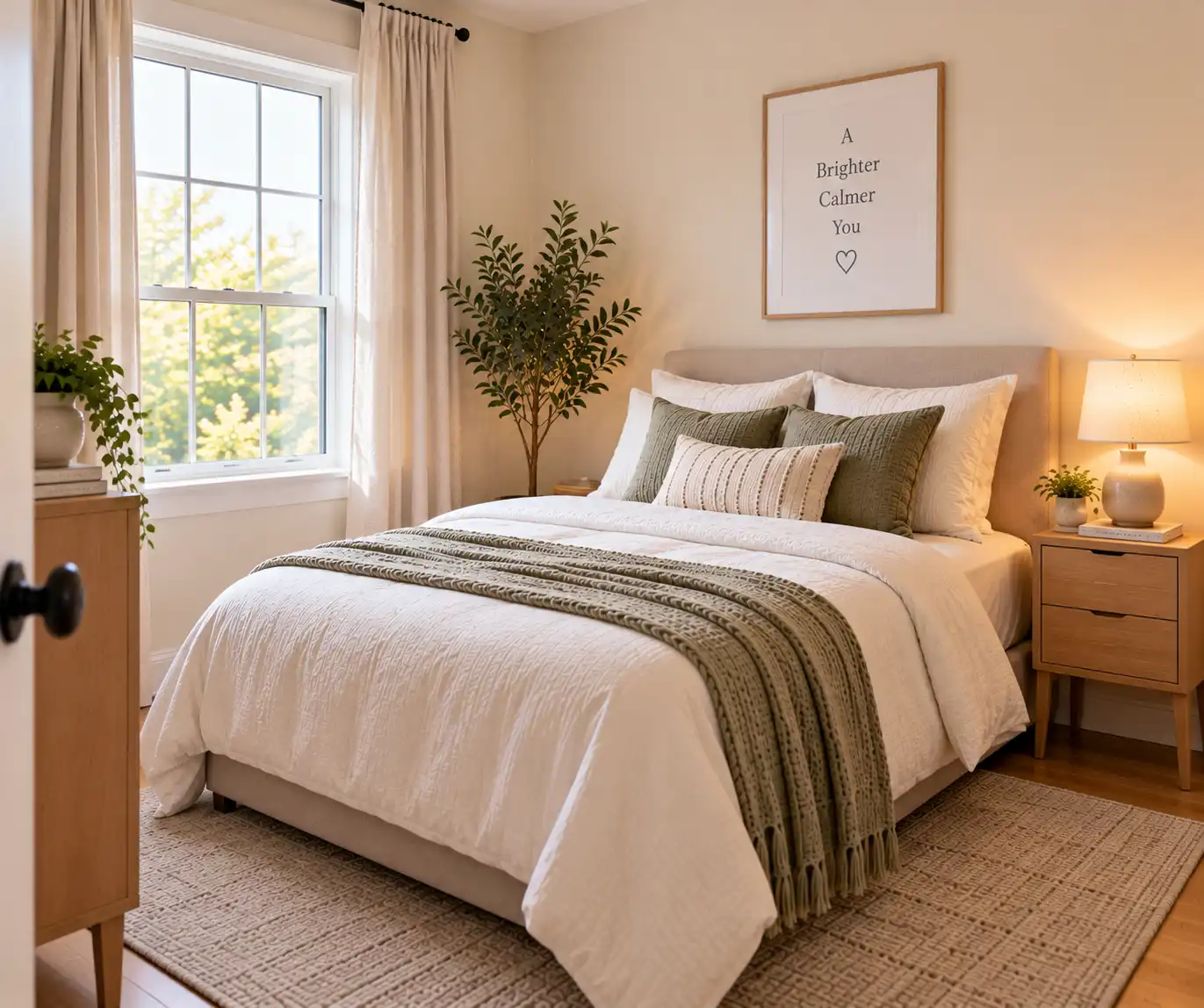
13. Use Furniture With Multiple Purposes
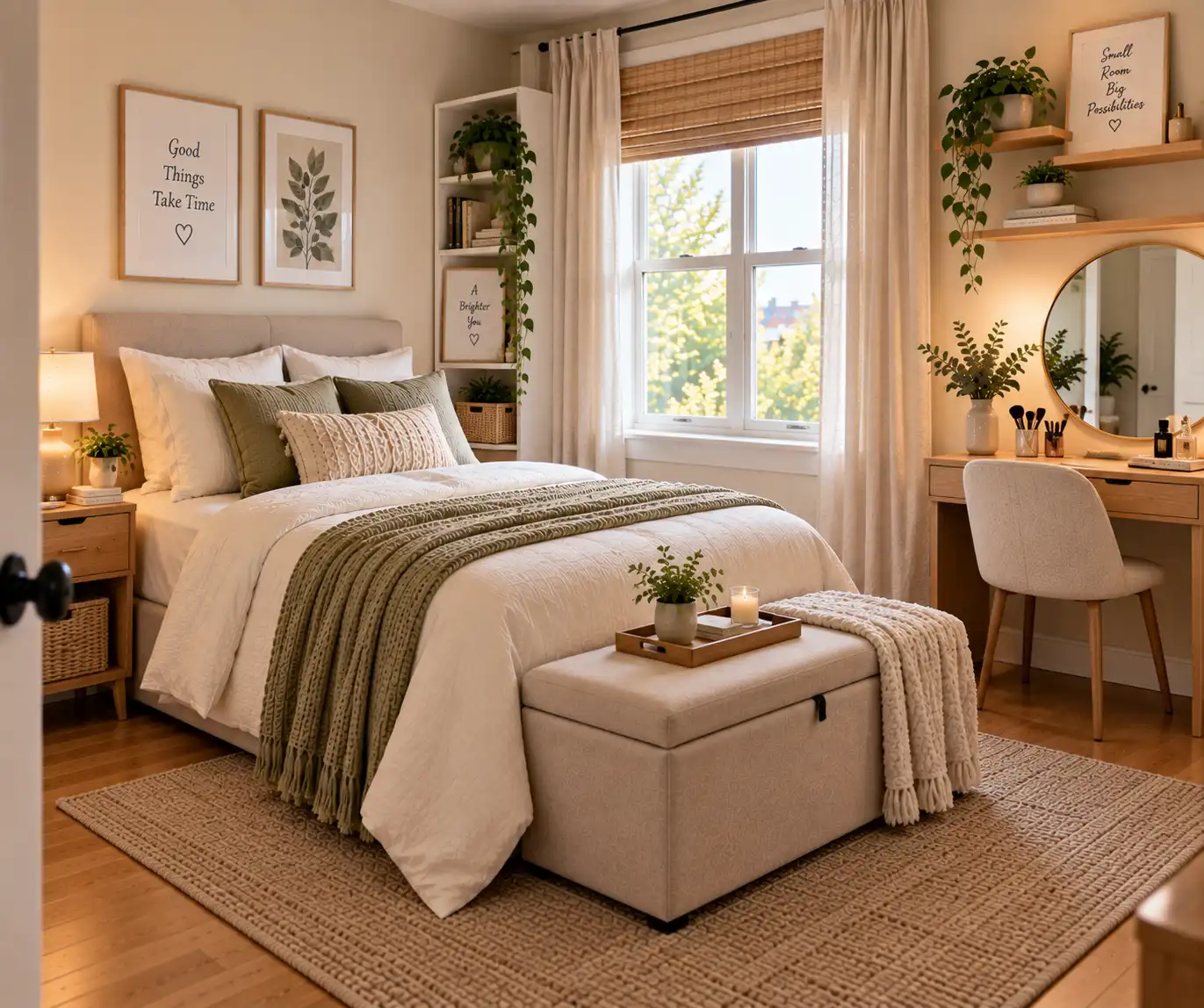
Multi-purpose furniture can be especially useful when every square foot matters.
A bench at the end of the bed can provide seating and hidden storage. A desk can double as a vanity, while a small stool can work as both seating and a bedside surface.
Think about how often you use each piece and whether one item can serve two functions.
This approach can help reduce the amount of furniture you need without making the room less practical.
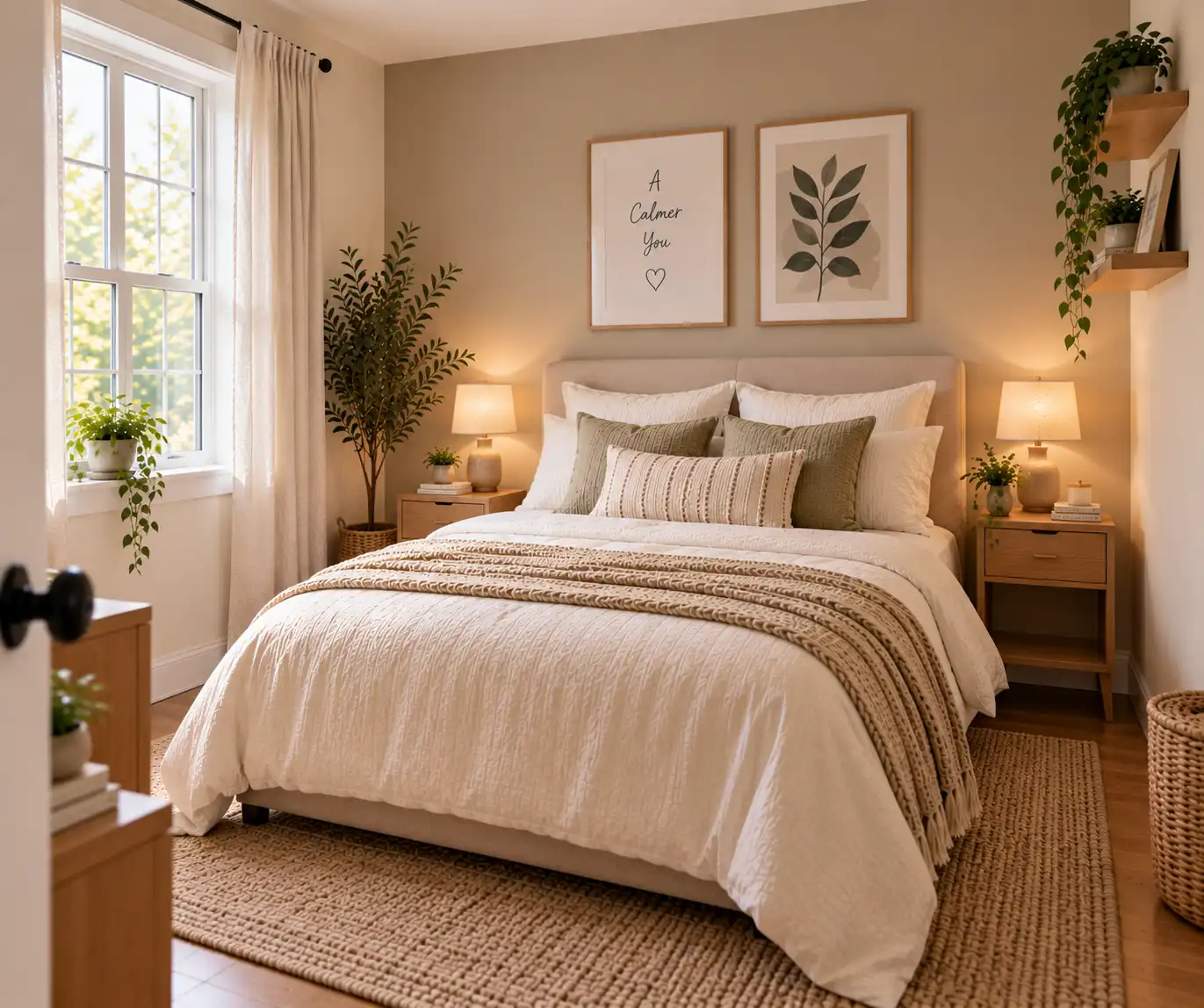
14. Create a Simple Accent Wall
A small bedroom can still have a feature wall.
Instead of adding several bold colors or patterns throughout the room, choose one wall as the focal point. The wall behind the bed is often a natural choice.
You could use a soft paint color, subtle wallpaper, wood panels, or simple artwork.
Keep the remaining walls and furniture relatively calm so the accent wall adds personality without making the space feel busy.
15. Declutter Before Adding More
Sometimes the best small bedroom idea is simply removing things you no longer need.
Look around the room and identify clothes, accessories, furniture, and decorative pieces that are rarely used. Removing unnecessary items can instantly make the space feel more open.
Try keeping everyday essentials accessible and storing less-used belongings elsewhere.
Before buying another organizer, ask yourself whether you actually need to organize the item or simply need less of it.
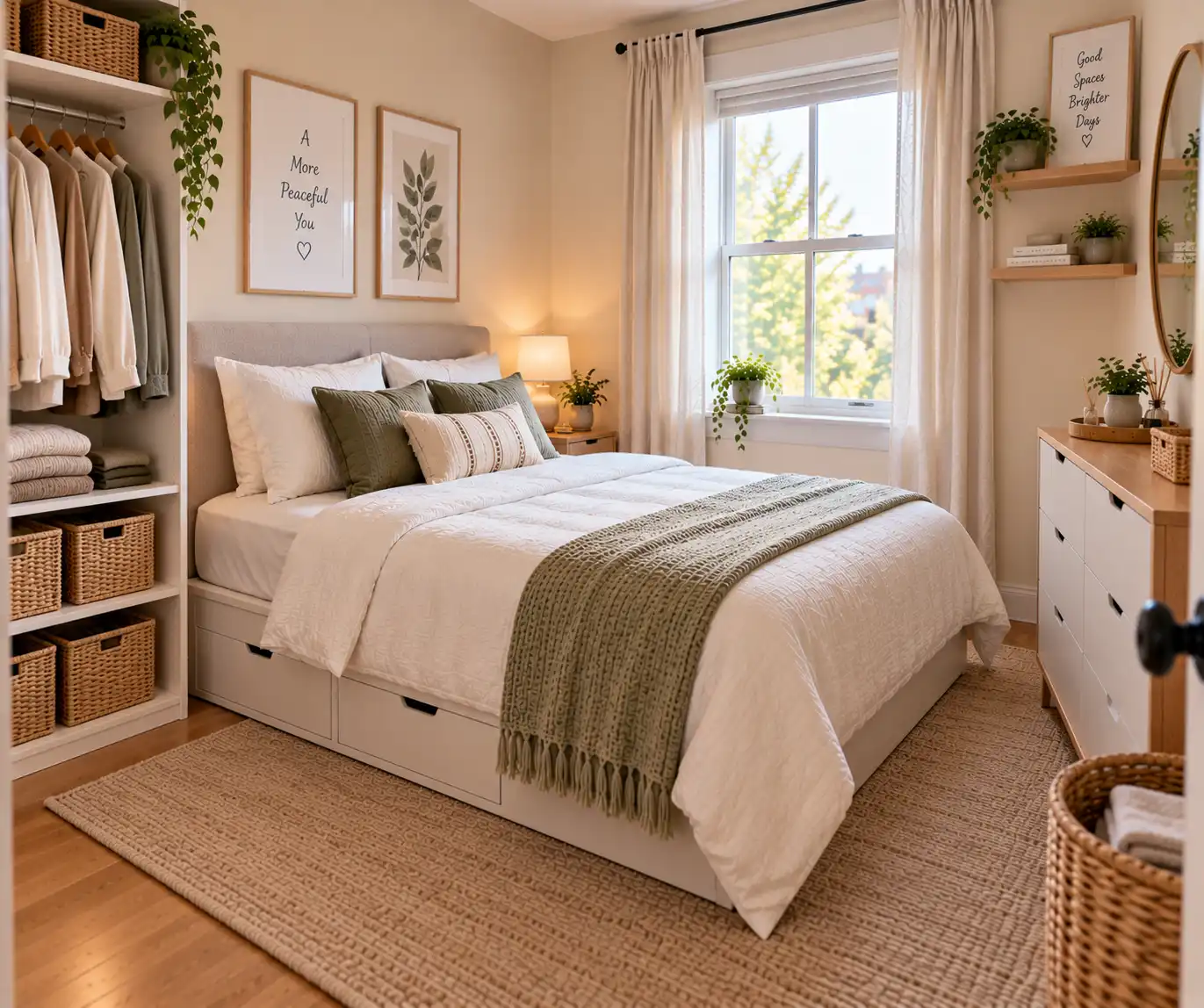
Easy Ways to Make a Small Bedroom Feel Bigger
You do not have to change everything at once. Start with the areas that make the biggest difference.
Try these simple steps:
- Clear unnecessary furniture to create more walking space.
- Use light colors on walls, bedding, and larger furniture.
- Add a large mirror where it can reflect natural light.
- Use vertical storage instead of spreading storage across the floor.
- Keep surfaces clear and display only a few favorite pieces.
- Choose furniture carefully and measure before buying.
- Make use of hidden storage under the bed or inside benches.
- Keep window areas open so natural light can move through the room.
If you are planning a bedroom refresh, start with layout and storage before buying new decor. A better arrangement can sometimes make a bigger difference than new furniture.
Final Thoughts
A small bedroom does not have to feel cramped. With the right layout, lighter colors, useful storage, and less visual clutter, even a compact room can feel comfortable and inviting.
The best small bedroom ideas are often simple ones. Focus on creating more open floor space, choosing furniture that fits, and keeping the room easy to move around in.
You do not need to redesign everything in one weekend. Start with one corner, remove what you do not need, and make small changes that work for the way you actually use your bedroom.
Frequently Asked Questions
How can I make a small bedroom look bigger?
Use light colors, keep the floor clear, add a large mirror, and avoid oversized furniture. Good natural lighting can also make the room feel more open.
What color is best for a small bedroom?
Soft white, cream, beige, light gray, and other muted shades can help create an airy feeling. You can still add darker or brighter colors through small decorative accents.
Should I put a large mirror in a small bedroom?
Yes. A large mirror can reflect light and create a stronger sense of depth. Place it where it reflects a bright area of the room rather than a cluttered corner.
How do I add storage to a small bedroom?
Use the space under the bed, wall-mounted shelves, tall storage units, floating nightstands, and furniture with built-in compartments.
What furniture should I avoid in a small bedroom?
Avoid furniture that is unnecessarily large for the room or leaves very little walking space. Bulky pieces can make a compact bedroom feel crowded.
Can a small bedroom still look stylish?
Absolutely. Choose a simple color palette, a few meaningful decorative pieces, comfortable textiles, and furniture that fits the room. Keeping the space organized can make the design feel much more polished.